
 Available in GB
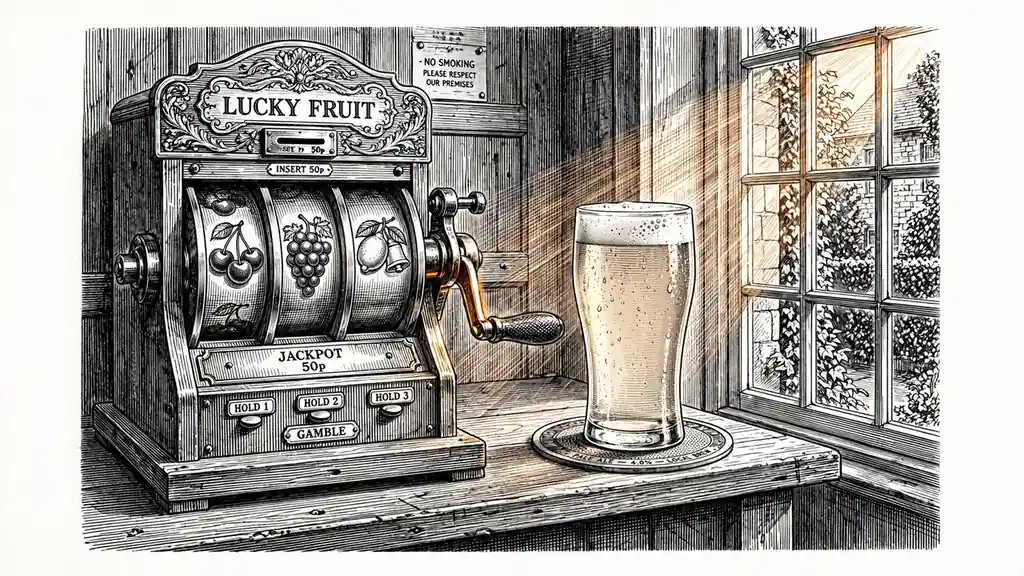
- RTP Is a Percentage, Not a Promise
- What UK Casino Rules Mean When You Play Slots
- Slot Games: Reels, Bets and Game Cycles
- Online Slots: Check the Game, Not Just the RTP Figure
- What Slot Machines Reveal About Their Features
- Low Volatility and the Shape of a Slot Session
- Pragmatic Play Slots: What This Guide Can and Can't Rank
- When There Isn't Enough Evidence to Name One Highest-RTP Slot
- Slot RTP and Table Games Are Different Comparisons
- A Search for the Highest-RTP Slot Still Needs a Verifiable Figure
RTP describes a slot’s theoretical return across many plays, while individual sessions can produce very different results.
RTP Is a Percentage, Not a Promise
RTP stands for return to player. It is a percentage used to describe how much of the money wagered on a slot is expected to be returned as winnings over a very large number of plays. It is a measure of the game’s long-term mathematical behaviour, not a forecast of what will happen to you.
That distinction is easy to miss when you are comparing online slots. A larger RTP figure can look like a clear answer to which game will pay you more. But it does not say what you will win in an evening, whether a particular spin will pay, or how long your balance will last. The figure is not a personal return rate. It describes a model across repeated play.
Imagine a game being played over and over on a vast scale. Its theoretical return would emerge from all those results together, rather than from each player receiving a neat share. One session might end with a win; another might end with no return. Neither session disproves the stated RTP. Short runs simply do not have to resemble the long-run calculation.
I find it helps to read RTP as a description of probability, not as a target the game owes you. A slot does not keep track of your previous results and adjust the next one to bring your personal total into line. A run of losing spins does not mean a win is due, and a recent win does not mean the next spin is less likely to pay. Treating the figure as a promise can turn ordinary variation into a mistaken sense that you are “close”.
There is another useful distinction: RTP and house edge describe opposite sides of the same broad calculation. RTP concerns the modelled share returned to players; house edge concerns the share retained by the game over time. Where a game has a positive house edge, its mathematical expectation for the player is negative over enough sessions, however slowly losses may build. That is a long-run statement, not a prediction that every player loses in every session.
Low-Volatility Slots in the UK: How They Play
The word “enough” matters. A result can swing either way in the short term, and the longer-run expectation does not tell you the exact point at which your own play will match it. Nor does it promise that your results will eventually settle at the advertised percentage. You may stop playing well before a large number of results has accumulated. You may also have a session that is unusually good or unusually poor. The theoretical average is not a repayment schedule.
This is why searching for the highest RTP slots in the UK needs a little care. Even if you find a game with a higher stated return than another, that alone cannot identify which one will leave you ahead today. It can help describe a game’s mathematical profile, but it cannot remove chance from the outcome or turn a session into a reliable source of income. A percentage can be useful without being a guarantee.
It also helps not to confuse “return” with a cash-out promise. RTP does not mean that a machine will return a fixed portion of your own stake before you leave, or that winnings will arrive in regular instalments. It does not set a timetable for payouts. The figure is about an aggregate expectation, while your experience is a sequence of individual outcomes. Those are different scales, and the gap between them is where many misleading assumptions begin.
When you see an RTP figure, ask what it actually tells you: the modelled return across extensive play. Then leave it there. It is not a way to predict the next spin, compare your luck with someone else’s, or recover a loss by continuing. A higher percentage may be relevant when comparing game information, but it cannot make an uncertain session certain.
If you play, decide what you are comfortable spending before you start and regard that money as entertainment spending, not as an investment. Stop when you reach the limit you set, rather than trying to make your personal results match a theoretical average. RTP explains a long-run calculation. Your session remains your session.
That is the useful starting point: read the percentage as information about the game’s model, not as a promise about your balance. It can inform a comparison, but it cannot tell you what will happen next. A percentage is not a receipt.
DO
- Read RTP as a description of probability
- Treat the figure as an aggregate expectation
- Deciding what you are comfortable spending before you start
DON’T
- Treat RTP as a personal return rate
- Treat RTP as a target or a promise
- Assume a run of losing spins means a win is due
What UK Casino Rules Mean When You Play Slots
A slot site can look polished and still leave you with a basic question: who is responsible for overseeing it? In Great Britain, the relevant regulator for commercial gambling is the UK Gambling Commission. Its remit includes online casinos, so the rules are not limited to betting shops or venues you can visit in person.
For remote gambling offered to people in Great Britain, the operator’s location does not decide whether the Commission’s rules apply. A business cannot sidestep the local regulatory system simply by keeping its offices or key equipment elsewhere. What matters is that it is offering remote gambling to consumers in Great Britain.
That distinction is useful when you are comparing online casinos. A site may use familiar language, accept British customers or show games that you recognise, but those details do not establish that it is regulated here. The operator’s licence is the more relevant starting point. I would look for the business’s licensing information before depositing, then check that it matches the operator and the service being offered.
What a UKGC licence covers
The Commission issues operating licences to businesses, while individuals who carry out certain roles in the gambling industry may need personal licences. These are different forms of permission: an operating licence applies to the company providing the gambling service, and a personal licence applies to an individual working in a regulated capacity.
For a player, the operator’s status is the practical point. A casino that offers online slots is part of a wider remote gambling service, and the business behind it is the party that must hold the relevant operating permission to serve the market. A game’s provider and the casino are not interchangeable: the casino is the operator customers use, even when another company made the slot.
Online Keno Casinos in the UK: Checks Before Play
The Commission also regulates gambling activity across the United Kingdom, including online casinos. Its specific role in remote gambling is framed around services offered to consumers in Great Britain. That wording matters: it is the market being served, not the physical location of the equipment, that brings a remote operator within the Commission’s oversight.
When I check a casino, I do not treat a badge or a line in the footer as proof on its own. Find the operator’s licence details and compare them with the public register maintained by the UK Gambling Commission. Make sure the listed business is the same one named in the casino’s terms, rather than assuming a familiar brand name tells you who holds the licence. Small detail, useful check.
Why the operator matters more than the game
The search for a slot with a high published RTP can pull your attention towards the game itself. But the game figure does not tell you whether the casino offering it is operating under the British regulatory system. Those are separate checks: one concerns the game information, the other concerns the business taking your custom.
A regulated operator is accountable within a framework overseen by the Commission. That gives you a clear regulator to identify when checking who is responsible for the service. It does not mean every game will suit you or that a particular result is assured; it means the operator’s presence in the market is subject to the relevant licensing system.
Check the operator’s licence details on the UK Gambling Commission public register to ensure the business is regulated in Great Britain.
I find it easiest to think of licensing as the basic groundwork, not a recommendation for one casino over another. Confirm who runs the site, establish that the business has the appropriate operating licence, and check the details against the Commission’s register before you pay in. If those details do not line up, do not fill the gap with guesswork.
The same approach applies whether you arrived looking for a particular slot, a casino with a broad games catalogue or a place to play real money slots. Start with the operator. A regulated casino is identified by the business’s permission to offer gambling in the market, not by a game title, a promotional claim or the appearance of its website.
Slot Games: Reels, Bets and Game Cycles
A slot screen can look simple: reels, symbols and a button to start play. The part worth understanding before you press it is how the game treats your bet. On a five-reel slot, a bet can be applied across all five reels. That describes how the stake is used in the game; it does not mean you should assume the displayed amount is multiplied by the number of reels.
A reel is the moving strip of symbols shown on the screen. When a game cycle begins, the reels move and then stop, leaving a set of symbols visible. The game checks that result against its rules to determine whether a winning combination has landed. That is the basic sequence: choose the bet, start the cycle, then see what the game has recorded.
Video Slots in the UK: How Games and Features Work
The picture on screen is only part of the rules. A game may show several reels at once, but you still need to know what your chosen bet covers. Some betting setups let you choose how much to stake on each line; others present the bet as a total. The wording and controls vary between games, so look at the bet display before starting. If the screen shows a total stake, treat that as the amount committed for that cycle, rather than trying to infer it from the artwork.
Paylines are the paths across the reels that the game checks for combinations. A line may run across a row or follow a less obvious route, depending on the design. When a game offers a choice of lines, changing that choice can affect how the bet is allocated. If all available lines are active, the displayed total may reflect the combined stake across them. Read the game’s own explanation: a busy screen is not a substitute for clear bet information.
This matters when you compare slot titles. Two games can both show five reels while handling the stake differently. One may make the total easy to see; another may require you to open the betting panel or rules screen. The reel count alone tells you little about what a spin costs. I check the displayed total first, then make sure I understand whether it applies to the whole game or to each selected line.
A game cycle is the unit of play that starts when you set the bet and initiate a spin, then ends once the result is determined. Keep the distinction between a cycle and a session in mind. A session can contain many separate cycles, but the amount shown for one cycle is the immediate commitment. This makes the bet panel more useful than a game’s title or visual theme when you are trying to understand the cost of play.
Five-Reel Slots in the UK: Layouts and Features
The same habit helps when a game offers buttons or settings that change the bet. Take a moment to see what has changed on the display before starting again. A selected line, coin value or stake setting may alter the total, and the labels are not identical across every title. If the controls are unclear, open the rules or paytable rather than guessing. It is a small pause, and a cheaper way to learn than discovering the setting after a spin.
People looking for a slot with the highest RTP often begin with a number on a listing. But knowing how a game presents its reels and bet is a separate, practical check: the RTP figure does not tell you what your selected stake means on that screen. Nor does a five-reel layout, by itself, establish how much a cycle costs or what result will appear.
So start with the mechanics you can inspect directly. Count the reels if that helps you identify the layout, check which lines or options are active, and read the total bet before you play. A five-reel game can apply a bet across all five reels; the interface should make clear how your choice is being used. If it does not, do not fill in the blanks yourself. Better to stop and check.
Online Slots: Check the Game, Not Just the RTP Figure
A slot listing can make comparison look simple: find a percentage, sort from highest to lowest, pick a game. I wouldn’t rely on that alone. A figure is useful only when you can tell which game it belongs to, where it applies and whether the listing gives enough detail to check it.
Three-Reel Slots in the UK: How They Work
Start with the exact title. Similar names, sequels and themed versions are not interchangeable. If a casino page names a provider as well as the game, note both; that makes it easier to match the listing with the right game information elsewhere. A broad label such as “fruit slot” tells you little about the particular title being offered.
Then look for an RTP figure attached to that specific game. A number in a promotional banner may refer to a selection of games, a general claim or a different title on the same page. Make sure the figure appears alongside the game’s own information, rather than assuming a casino-wide statement describes every slot it offers.
The wording around the figure matters too. Is it clearly presented as the game’s RTP, or is it part of a vague phrase about returns? If the page does not explain what the number refers to, you cannot make a sound comparison from it. A neat percentage is not evidence of a neat listing.
I also check whether the casino gives access to the game’s information panel or rules. Those details should let you confirm the title and understand how its published information is presented. If the page offers only a promotional claim and no game-specific details, treat it as incomplete rather than filling in the gaps yourself.
A practical way to compare listings
When you have several candidates, use the same checks for each one:
- Match the full game title and provider.
- Find the RTP information within that game’s own listing or information panel.
- Check that the figure is explicitly attached to that title.
- Note any qualification or explanation shown beside it.
- Compare like with like, rather than mixing a game figure with a casino-level claim.
This is not a ranking method by itself. It is a way to avoid comparing a clearly labelled game figure with an unrelated headline. If one listing gives precise game information and another offers only a broad claim, the first is easier to assess, even if the second sounds more impressive.
Pay attention to where the information appears. A casino may show a short summary in its lobby and provide fuller details after you open the game. Read the fuller entry before drawing a conclusion. If the figure is absent, unclear or disconnected from the title, do not infer it from another game by the same provider. Familiar branding does not make two games identical.
The casino’s description and the game’s own information should not be treated as interchangeable. The operator presents the listing; the game information is where you can check what is stated for the title itself. If those details do not line up, pause rather than choosing whichever wording looks more favourable.
I would keep a note of the exact title and the figure shown, especially when comparing games across different casino pages. That simple habit prevents a common mix-up: remembering a percentage but forgetting which game it belonged to. It also gives you a clear reason to leave a title out of your comparison when its listing cannot be checked.
Bonus Buy Slots UK: How the Feature Works
A useful listing is specific, readable and tied to the game you are considering. A bare percentage is not. Take a moment to check the label, the title and the supporting game information before treating any slot as a serious contender. Short check. Better comparison.
Top online casinos in the UK
- SpinFormulaBonus: 550% Up To £15,000 + 550 FS · Payout speed: 1-3 business days
- DieselwinBonus: Welcome Pack 250% up to £4000 + 200 FS · Payout speed: 1-3 business days
- WinBeastBonus: €5000 + 500 FS + €650 Freebet · Payout speed: 1-3 business days
- Revery PlayBonus: 100% up to€1,000+ 100 FS · Payout speed: 1-3 business days
- x3betBonus: Welcome Pack 100% Up to £1.000 + 200 Free Spins · Payout speed: 1-3 business days
- NightWinBonus: £900 + 400 free spins · Payout speed: 1-3 business days
- AmunbetBonus: Join now and get 450% up to 2,700 GBP + 450 FS · Payout speed: 1-3 business days
- SlotoSportBonus: 500% up to £ 10 200+ 777 FS · Payout speed: 1-3 business days
What Slot Machines Reveal About Their Features
A slot’s visible features can tell you something about its design, but they do not identify it as the machine with the highest return. Low-volatility titles are commonly associated with a particular mix: five reels, at least twenty-five paylines, fixed jackpot amounts and bonus rounds that apply multipliers to wins already accumulated. Treat that as a design pattern, not a checklist every game must follow.
The reels are the moving columns you see on screen. In a 5 reel slot game, the layout gives the game its familiar five-column shape, while paylines define the routes on which a matching result can count. A game with twenty-five or more paylines offers many such routes. That tells you about the way combinations are recognised; it does not, by itself, tell you the value of a win or how often a particular result will appear.
Paylines are worth checking in the game’s rules because the number alone can be misleading. What matters is how the game defines a winning line and what applies to your selected bet. I look for a clear paytable rather than assuming that a larger line count means a better result. More routes across the reels are a feature of the layout, not a promise that a spin will pay.
fixed jackpot
An amount that is set as a fixed prize rather than being drawn from a progressive pool.
Jackpots have their own distinction. In the low-volatility design pattern, the jackpot amount is fixed rather than drawn from a progressive pool. A fixed prize is set as an amount; a progressive pool can grow as play contributes to it. That difference describes how the jackpot is structured, not whether it is easy to win. The word “jackpot” can sound decisive. The rules matter more.
Bonus rounds add another layer. Some low-volatility games use multipliers on wins accumulated during the feature. In plain terms, a multiplier can increase the value of those wins according to the game’s rules. Read the feature description to see what the multiplier applies to and how the bonus is entered. Do not assume that every bonus round works the same way simply because both games use the word “multiplier”.
These details can help you compare the shape of two machines without confusing their features with their return. Reels describe the layout; paylines describe possible winning routes; jackpot rules explain whether the prize is fixed or progressive; bonus rules show how a feature handles accumulated wins. None of those labels alone establishes which title has the highest RTP.
So, if you are browsing casino slot machines and want to understand what you are looking at, start with the game’s own rules and paytable. Notice the layout, line structure, jackpot type and bonus mechanics, then keep each detail in its proper place. A familiar feature is not a ranking, and a crowded feature list is not evidence of a better return. A useful distinction.
First-Deposit Bonus Casinos in the UK: What to Check
Low Volatility and the Shape of a Slot Session
Volatility describes the way a slot distributes its returns, not how much you are likely to get back overall. In a low-volatility game, wins tend to be smaller and spread more evenly through play. A high-volatility slot pays less often, but its wins can be larger. That difference shapes the session; it does not tell you which game has the better RTP.
Across most low-volatility titles, a winning combination typically appears every three to six spins on average. Treat that as a broad pattern, not a schedule. Several spins can pass without a win, or a run of wins can arrive close together. The average does not promise that your next combination will land within a particular number of spins.
This is why “low volatility” can sound more reassuring than it is. A steady run of small wins may make a balance move slowly, but it does not mean the balance is protected. A game can return often while still paying less than you stake over time. Frequent wins are not the same thing as frequent profit.
When people look for the highest-RTP, lowest-volatility online slots in the UK, they are combining two separate measures. RTP describes a theoretical return across extensive play; volatility describes the pattern and size of wins. A slot can have a high published RTP and a volatile payout pattern, or a lower RTP with smaller, more frequent returns. Neither label replaces the other.
I find it more useful to ask what kind of session I can tolerate. If long quiet stretches frustrate you, frequent smaller wins may feel less stop-start. If you prefer the possibility of a larger win and can accept longer gaps, a higher-volatility game has a different rhythm. Neither style turns a slot into a reliable way to make money.
Attention Low volatility can spread losses out gradually, but it cannot remove the mathematical expectation of a negative result.
There is a blunt mathematical point underneath the choice: where a game has a positive house edge, its expected result is negative over enough sessions. Low volatility can spread losses out gradually; it cannot remove that expectation. The rhythm changes. The underlying risk does not.
Pragmatic Play Slots: What This Guide Can and Can’t Rank
A search for Pragmatic Play games with the highest RTP is narrower than a search for slots generally: it asks you to compare titles from one provider. But the provider’s name is not an RTP figure, and it does not put every game in a meaningful order by itself. A ranking needs comparable, title-specific information.
I’d keep three questions separate when looking at a Pragmatic Play game. Which exact title is it? What RTP figure is shown for that title? And does the information refer to the version offered where you intend to play? Without those details, calling one game the provider’s highest-RTP slot would be guesswork dressed up as a league table.
Volatility is another separate measure. It describes the pattern of returns, not the RTP ranking. A low-volatility game tends to spread returns across more frequent, smaller wins; a high-volatility game tends to return less often, with larger wins when they occur. Neither description identifies which Pragmatic Play title has the highest RTP. Nor does a stream of small wins establish that a game has a better long-run return.
Fast-Payout Online Casinos in the UK: What to Check
That distinction matters when a provider-specific list mixes labels. “High RTP” and “low volatility” are not interchangeable selling points. If you want to compare Pragmatic Play titles, compare the published RTP figures for the exact games, rather than using volatility or a provider name as a substitute. Then consider volatility separately as a description of how a session may feel.
I would not fold games from another provider into a Pragmatic Play ranking, either. A search that mentions Hacksaw Gaming is asking about a different provider; it needs its own title-by-title comparison. Keep the groups separate.
The useful distinction is simple: the provider tells you who made a game; the game’s own published details are what you need to compare its RTP. A tidy list is no use if its figures cannot be tied to the titles.
When There Isn’t Enough Evidence to Name One Highest-RTP Slot
I can’t give you a reliable title for the single slot with the highest RTP in the UK. Calling one game the winner would require comparable RTP figures for the exact games being considered. Without that comparison, a “highest” label is just a claim, not a useful answer.
There is also a difference between asking for a slot and asking for a casino. An operator hosts games; it does not have one RTP that applies across its whole catalogue. Each slot has its own stated return figure, so naming a casino as the highest-RTP option would need a clear basis for comparing its games with those at other casinos. A casino’s name alone tells you nothing about the return of the slot you plan to play.
What is the highest-RTP slot in the UK?
I can’t point to one title as the answer. The honest answer is that no single game can be named here as the established leader.
Is a casino’s name enough to know its returns?
No, a casino’s name tells you nothing about the return of the slot you plan to play. Each slot has its own stated return figure.
That is why I would treat a headline promising the UK’s top-returning slot with care. The wording sounds precise, but it only means something if the games and figures being compared are identified. Otherwise, there is no way to tell whether the claim refers to a particular title, a provider’s range or an operator’s selection.
For a choice you can check, look for the RTP stated for the exact game you intend to open, rather than relying on a site-wide “best” label. If a page names a winner but gives no clear figure or comparison, I would not take the ranking at face value. A confident heading is easy to write. A useful comparison is harder.
So, what is the highest-RTP slot in the UK? I can’t point to one title as the answer. The honest answer is that no single game can be named here as the established leader. That is less satisfying than a neat number-one pick, but it avoids turning an unsubstantiated claim into advice.
Slot RTP and Table Games Are Different Comparisons
A slot and a table game do not offer the same kind of comparison. If you are looking for a slot with a high published RTP, roulette payouts cannot answer that question: roulette uses specific bets and fixed payout rules, while a slot’s RTP describes the game as a whole. Mixing the two gives you figures that look comparable but describe different things.
Take European roulette. Its wheel has 37 pockets, numbered from zero to 36. A straight bet on one number pays 35:1. Bets on red or black, odd or even, and low or high pay 1:1. Those are payouts for particular bets, not an RTP ranking for slots or a promise about what you will take away from a session.
That distinction matters when you ask which casino games offer the highest returns. The answer depends on what you mean by “returns”: a slot’s published RTP, a roulette bet’s payout, or the rules of another table game. A large payout on one winning roulette bet is not the same measure as a game’s overall return. Nor does a roulette payout tell you which slot has the highest RTP in the UK.
Live casino games belong to the wider casino mix, but the live format does not make their rules interchangeable with slots. A live roulette table still centres on roulette bets and their payouts; a slot remains a separate game with its own published information. Keep the comparison within the same kind of game.
I find it useful to decide first whether I am comparing slots with slots or looking across casino games more broadly. For a slot-focused choice, stick to slot information. For roulette, read the rules for the bet you intend to make. Different yardsticks.
A Search for the Highest-RTP Slot Still Needs a Verifiable Figure
When you are comparing slots, the label “highest RTP” is useful only when it is attached to a figure you can check for the specific game you plan to play. A broad claim, a ranking with no clear basis or a number copied from another version of a title gives you little to work with.
I would not name one slot as the highest in the UK without that kind of evidence. The title alone is not enough: published game information needs to support the RTP being claimed, and the figure needs to relate to the version actually offered. Otherwise, a confident-looking ranking is just noise.
Treat “highest” as a claim to verify, not a promise about what your session will return. RTP describes a long-run theoretical measure; it does not tell you what will happen in a short spell of play. Even a clearly stated figure cannot guarantee a win.
So, if a casino listing gives a figure, check that it identifies the game and applies to the version you can access. If it does not, do not fill the gap with an assumption. A number earns trust by being traceable. Without that, there is no sound basis for calling a particular slot the highest-RTP choice.